

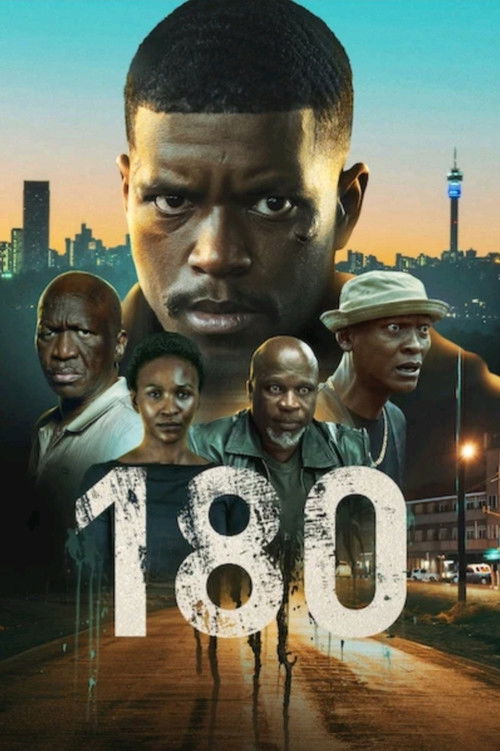
180 Movie Review: A Vengeance Thriller That Skids Off Course
180 is a gritty South African thriller that starts with a roar but eventually stalls out in a puddle of predictable tropes.
You’ve seen the "enraged father" trope a thousand times—from Taken to John Wick—but director Alex Yazbek tries to give it a localized, raw edge that feels uniquely tense. You’ll find yourself gripped by the initial tension, feeling the sweat on your palms as a simple commute turns into a life-altering nightmare. It promises a deep dive into the psyche of a man pushed to the absolute brink, yet it often feels like it's trying too hard to be "prestige" while leaning on B-movie logic. If you’re looking for a weekend watch that doesn’t require too much brainpower but offers some solid acting, this might just pass the vibe check.
Is 180 Worth Watching? (Quick Verdict)
| Our Rating | 5.8/10 — Stylized but shallow |
| Best For | Fans of gritty crime dramas and revenge flicks |
| Skip If | You want a plot that makes logical sense or breaks new ground |
While the emotional core of the story is palpable, the overall execution feels uneven. It’s a decent enough distraction for a Friday night, but don't expect it to stay with you much longer than the end credits.
Plot: What's 180 Actually About?
Imagine a sunny afternoon in Johannesburg. Prince Grootboom’s character is just trying to get his son to soccer practice when an unexpected road rage incident shatters their lives in seconds. It’s a split-second decision—a middle finger, a cut-off—that escalates into a brutal assault, leaving the young boy in a critical state in a sterile hospital ward. The system, as usual, is slow, bureaucratic, and seemingly indifferent to the carnage. This is where the enraged father decides that the law is a suggestion rather than a rule.
He trades his civilian life for a dark, underground hunt to find the driver who ruined everything. As he descends into the city's criminal underbelly, the lines between justice and pure, unadulterated vengeance begin to blur. He’s not just looking for an apology; he’s looking for a pound of flesh. But as he gets closer to the truth, he realizes that the driver might have connections that go much deeper than a simple case of bad temper on the highway. Can he finish what he started before he loses what’s left of his soul, or will the cycle of violence consume him entirely?
Direction & Writing: Does It Deliver?
Alex Yazbek clearly has an eye for tension, but his pacing in 180 is as erratic as the traffic he depicts. The first act is a masterclass in building dread; the way he lingers on the simmering heat and the claustrophobia of a traffic jam is genuinely unsettling. However, once the "vengeance" phase kicks in, the screenplay starts to leak oil. There’s a scene where the protagonist interrogates a low-level snitch in a dilapidated warehouse that feels like it was ripped straight out of a 90s action flick—clichéd dialogue and all.
Yazbek tries to balance a somber drama about grief with a high-octane crime thriller, but the gears grind loudly during the transition. The writing often underestimates the audience’s intelligence, over-explaining motivations that were already clear through the performances. It’s a case of a director wanting to make a profound statement on violence while being too enamored with the aesthetics of the violence itself. The middle section drags significantly, making a 100-minute movie feel like a much longer ordeal. While the intent is noble, the script needed a few more rewrites to smooth out the transition from a domestic tragedy to an urban manhunt.
Performances: Who Shines, Who Doesn't?
Prince Grootboom carries the weight of the world on his shoulders, and for the most part, he does it with incredible grace. He avoids the "shouting father" stereotype, opting instead for a simmering, quiet intensity that is much more terrifying. There’s a haunting moment in the hospital corridor where he simply stares at his bloody hands; you can see the exact moment the light goes out in his eyes. It’s a powerhouse performance trapped in a mediocre script.
Noxolo Dlamini is equally impressive as the grieving mother, providing the film’s only real emotional anchor, though she’s sadly sidelined as the plot shifts toward the hunt. On the flip side, the villains feel like caricatures. Warren Masemola is a fantastic actor, but here he’s given very little to do other than look menacing and growl threats. It’s a waste of talent that could have added a layer of complexity to the film’s moral landscape. Desmond Dube brings some much-needed gravitas in his limited screen time, but even he can't save the dialogue when it turns toward the melodramatic. The cast is doing the heavy lifting here, often making the material feel more significant than it actually is.
Visuals, Score & Production
Visually, 180 is striking. The cinematography utilizes a desaturated, dusty palette that perfectly captures the grit of the urban setting. The use of handheld cameras during the initial incident creates a frantic, nauseating energy that puts you right in the passenger seat. It’s beautiful to look at, even when the subject matter is ugly.
The score, however, is a bit of a mixed bag. It leans heavily on low-frequency drones and sharp, metallic stings to signal "danger," which works initially but becomes repetitive by the third act. There are moments where the music swells to tell you exactly how to feel, which feels manipulative rather than earned. When the film allows for silence—the beep of a heart monitor or the hum of the city—it’s far more effective. The production design is top-notch, making the transition from suburban comfort to the grime of the criminal world feel visceral and lived-in.
The Good & The Bad
What Works:
- Prince Grootboom’s restrained and haunting lead performance keeps you invested even when the plot wavers.
- The opening road rage sequence is masterfully directed, capturing the terrifying speed at which a normal day can turn tragic.
- The cinematography effectively uses the South African landscape to create a mood of isolation and impending doom.
What Doesn't:
- The script falls back on tired "vigilante father" tropes that we've seen done better in classics like Death Wish.
- The pacing sags significantly in the second act, losing the momentum built by the explosive opening.
- Supporting characters, especially the antagonists, lack depth and feel like one-dimensional obstacles.
Final Verdict: Should You Watch 180?
180 is a film that wants to be a profound exploration of a father's grief and the cycle of violence, but it settles for being a standard-issue thriller. It’s elevated by a strong lead performance and some stylish direction, but it’s ultimately let down by a predictable script and uneven pacing. If you’re a fan of the genre, there’s enough here to keep you occupied for a night, but don’t expect it to break any new ground. It’s a solid "watch once" movie that manages to be entertaining despite its flaws. It’s a 180-degree turn from a masterpiece, but it’s not a total wreck either.
**DekhoPrime Rating:
📌 Related Posts
🎬 Have you watched this movie? Drop your thoughts in the comments!
Where to Watch? Watch This Movie on Dekho Prime
