

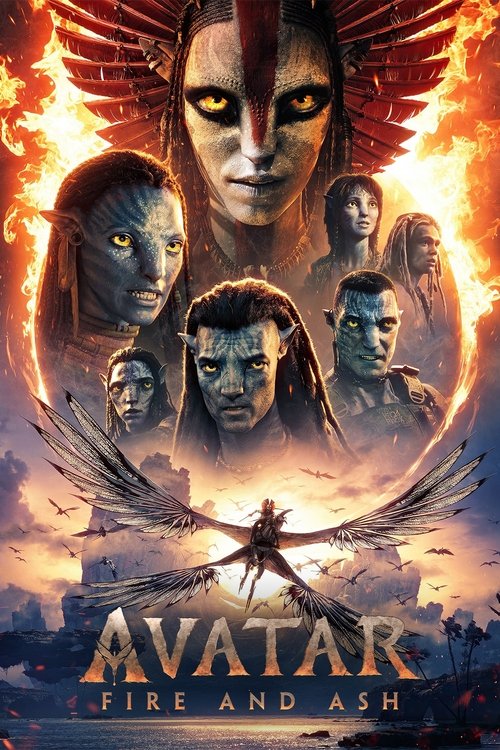
Avatar: Fire and Ash Review: Jake Sully Faces New Flames
Meta Description: Is Avatar: Fire and Ash worth the wait? Read our deep dive into James Cameron's latest Pandora epic and the Sully family's new war. Click to read more!
Thirteen years was the gap between the first two films, but James Cameron has wasted no time bringing us back to the bioluminescent wonders of Pandora. This time, however, the neon blues and tranquil teals are being choked out by embers and soot. Avatar: Fire and Ash is a daring, albeit familiar, expansion of the universe that asks a difficult question: What happens when the greatest threat to the Na’vi isn't the "Sky People," but their own kind? It’s a visual feast that swaps the serene oceans for the scorched earth of the volcanic regions.
The Heat of the Conflict: Plot Summary
Picking up shortly after the devastating events of The Way of Water, we find the Sully family in a state of fractured mourning. The war against the RDA has left scars that no amount of Eywa’s grace can heal. Having lost Neteyam, their eldest son, Jake Sully and Neytiri are struggling to keep their remaining children safe while navigating the complex politics of a world that is rapidly changing.
The peace they sought with the Metkayina is short-lived. A new threat emerges from the shadows of Pandora’s volcanic mountain ranges: the "Ash People." Unlike the Omatikaya or the Metkayina, this tribe is not interested in harmony. Led by the formidable and ruthless Varang (played with chilling intensity by Oona Chaplin), the Ash People believe that the Na’vi have become weak. They view the RDA’s arrival not just as an invasion, but as an opportunity to seize power and cleanse Pandora of those they deem unworthy.
As Varang begins her scorched-earth campaign, Jake is forced into a corner. He realizes that being a father and being a leader are often at odds. The plot follows the family as they trek across dangerous obsidian plains, forming uneasy alliances and discovering that the "fire" within the Na’vi can be just as destructive as the RDA’s missiles. It’s a story of grief, radicalization, and the desperate search for a middle ground in a world that only knows extremes.
Direction and the Evolution of the Sully Clan
James Cameron remains the undisputed king of the "event movie." His direction in Fire and Ash is tighter than in the previous installment, focusing less on the "National Geographic" style exploration and more on the simmering tensions between the characters. He manages to make the volcanic landscapes feel as lived-in and biological as the rainforests of the first film.
The acting continues to be the backbone of this performance-capture marvel. Sam Worthington delivers his best performance as Jake Sully yet, portraying a man who is tired of fighting but knows he can never stop. Zoe Saldaña’s Neytiri is a powerhouse of raw emotion; her grief over her eldest son is palpable in every frame, and her suspicion of the Ash People provides much of the film’s friction.
The standout, however, is Oona Chaplin. As Varang, she provides a mirror to Jake—a leader who believes she is doing what is right for her people, regardless of the cost. Stephen Lang also returns, and while some might feel his presence is becoming a trope, Cameron finds new ways to utilize his antagonistic energy. The chemistry between the younger cast members, particularly Sigourney Weaver’s Kiri and Britain Dalton’s Lo'ak, continues to be a highlight, grounding the high-concept sci-fi in relatable sibling dynamics.
A New Palette: Cinematography and Music
If The Way of Water was a masterclass in fluid dynamics, Avatar: Fire and Ash is a masterclass in particle effects and lighting. The cinematography by Russell Carpenter is breathtaking, capturing the way orange embers dance against the dark skin of the Ash People. The shift from the cool blues of the ocean to the harsh, high-contrast greys and reds of the volcanic region gives the film a grittier, more visceral feel.
The music, composed by Simon Franglen, leans heavily into percussion and dissonant brass to reflect the aggressive nature of the new tribe. While it pays homage to James Horner’s original themes, it carves out a new sonic identity that feels more urgent and threatening. The sound design, specifically the roar of volcanic vents and the crackle of burning forests, is immersive enough to make you feel the heat in the theater.
The Good, The Bad, and The Ashy
Every James Cameron film is a balancing act of spectacle and substance. Here is a breakdown of what worked and what missed the mark:
Positives:
* World-Building: The Ash People are a fascinating addition to the lore. Seeing a "villainous" side to the Na’vi adds much-needed complexity to the series' morality.
📌 Related Posts
🎬 Have you watched this movie? Drop your thoughts in the comments!
