

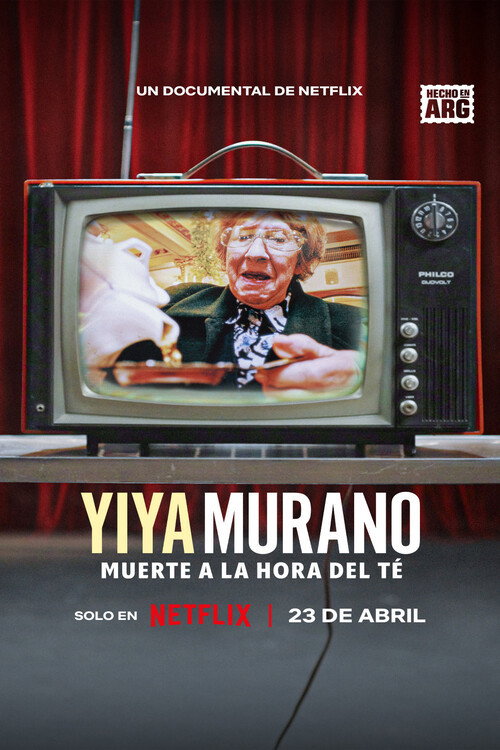
Yiya Murano: Death at Tea Time Review: A Killer Doc You Can't Miss!
This documentary is a masterclass in true crime storytelling, leaving you utterly gripped and questioning everything you thought you knew about a national villain. If you're looking for a film that digs deep into the dark corners of human nature and a notorious historical scandal, then stop scrolling right now; Yiya Murano: Death at Tea Time is an absolute must-watch. It plunges you headfirst into the chilling saga of Yiya Murano, a woman infamous for allegedly poisoning her friends to cover up financial scams in 1970s Argentina. This isn't just a recounting of facts; it's an intimate, haunting exploration seen through the eyes of her own son, Martín, who seeks to unearth the truth behind his mother's legendary status and the legacy of death she left behind. Prepare to be fascinated, disturbed, and ultimately, deeply moved.
Is Yiya Murano: Death at Tea Time Worth Watching? (Quick Verdict)
| Our Rating | 10/10 — An unforgettable deep dive into a dark legend. |
| Best For | True crime aficionados, documentary lovers, those fascinated by complex human psychology. |
| Skip If | You prefer pure fiction, or shy away from real-life stories of betrayal and grim consequences. |
Absolutely, unequivocally worth watching. This documentary transcends the typical true-crime genre, offering an emotionally resonant and intellectually stimulating experience that stays with you long after the credits roll. It's a rare gem that manages to be both profoundly personal and historically significant.
Plot: What's Yiya Murano: Death at Tea Time Actually About?
The film unravels the perplexing story of Yiya Murano, an Argentine woman whose name became synonymous with betrayal and murder in the 1970s. Accused of poisoning three of her friends with cyanide-laced tea and pastries, Yiya's motive was reportedly to cover up a series of financial scams she had orchestrated. Her case captivated Argentina, painting her as a sophisticated, cold-blooded killer who used charm and hospitality to commit unspeakable acts. Despite being convicted, she was eventually freed in the 1990s, only to re-emerge in popular culture as a bizarre, almost celebrated, pop icon – a figure of dark fascination rather than pure infamy.
Decades later, her son, Martín Murano, embarks on a deeply personal and often painful journey to confront his mother's legacy. He doesn't just want to understand the facts; he wants to peel back the layers of myth and media sensationalism to reveal the true face of the woman who was his mother, a woman responsible for so much death. Through interviews, archival footage, and his own emotional reflections, Martín grapples with the conflicting narratives: was she truly a monster, a victim of circumstance, or something far more complex? The documentary doesn't offer easy answers, instead inviting viewers to ponder the nature of truth, memory, and the lasting impact of notoriety.
Direction & Writing: Does It Deliver?
Alejandro Hartmann's directorial hand in Yiya Murano: Death at Tea Time is nothing short of masterful. He navigates the treacherous waters of true crime with a delicate yet unflinching approach, eschewing sensationalism for profound psychological exploration. The pacing is deliberate, allowing the gravity of the story to sink in, building tension not through cheap thrills but through the slow, methodical unveiling of facts and emotions. Hartmann expertly weaves together archival footage from the 70s and 90s with contemporary interviews, creating a rich tapestry that feels both historically grounded and intimately personal.
The screenplay is intelligent and layered, refusing to simplify Yiya Murano into a one-dimensional villain. Instead, it presents a complex portrait, often through the conflicting perspectives of those who knew her. One particularly striking moment is when Martín Murano sits with an elderly woman, a distant relative, who recounts a seemingly innocuous tea party from her youth. The camera lingers on the woman's hands, slightly trembling as she describes the delicate china and the 'sweet' treats, making the implicit threat of being poisoned palpable without a single word being spoken directly about the crimes. This nuanced storytelling exemplifies Hartmann's ability to evoke profound unease and empathy, letting the unspoken speak volumes.
Performances: Who Shines, Who Doesn't?
In a documentary, "performances" take on a different meaning, often referring to the compelling presence and narrative contribution of its subjects. Here, Martín Murano is the undeniable anchor and standout presence. His journey is the emotional core of the film, and his honesty and vulnerability are truly captivating. There's a raw, palpable courage in his quest to understand his mother, a woman whose name is synonymous with death and betrayal. You feel every ounce of his internal struggle, the conflict between filial love and the shocking reality of her alleged crimes.
There’s a particularly poignant scene where Martín is going through a box of his mother's old personal effects, perhaps a faded scarf or a handwritten recipe. He picks up a small, unassuming trinket, his eyes welling up as he recalls a childhood memory, a tender moment with his mother before the shadow of her crimes cast its pall. This unscripted, deeply personal moment is more powerful than any dramatic monologue, showcasing the profound human cost of Yiya's actions. The other interviewees, including Virginia Messi and Gabriela Boccalandro, provide crucial context and different perspectives, each adding a vital piece to the puzzle of Yiya's enigmatic character, all contributing to a rich, multifaceted narrative without any discernible weak links.
Visuals, Score & Production
The visual storytelling in Yiya Murano: Death at Tea Time is thoughtfully executed, creating a mood that perfectly complements the narrative's somber yet investigative tone. Cinematography employs a blend of crisp, intimate close-ups during interviews, often highlighting the emotional weight on the subjects' faces, alongside more expansive shots of Argentine landscapes that feel both beautiful and subtly melancholic. The colour palette leans towards muted, slightly desaturated tones for archival footage, effectively distinguishing the past, while contemporary scenes maintain a natural, observational clarity.
Sound design is judiciously used, often allowing silence or subtle ambient noise to amplify the emotional impact of a revelation. The score is atmospheric and understated, never overwhelming the narrative but rather enhancing the sense of mystery and introspection. It weaves a delicate thread of suspense and sorrow, particularly in moments when Martín is reflecting on his mother's actions and the death she caused. The overall production quality ensures that the focus remains squarely on the compelling human story and the chilling facts, without ever resorting to visual or auditory theatrics.
The Good & The Bad
What Works:
- Martín Murano's deeply personal and courageous journey to uncover the truth about his mother is the film's emotional bedrock, providing an unparalleled intimacy.
- The masterful blending of historical archival footage with contemporary interviews creates a rich, layered narrative that feels both authentic and comprehensive.
- Alejandro Hartmann's direction is subtle yet powerful, refusing sensationalism and instead focusing on the complex psychological dimensions of Yiya Murano and her legacy.
- The film expertly explores how a figure associated with death and crime can become a strange kind of pop icon, offering insightful commentary on media and public perception.
What Doesn't:
- Viewers accustomed to fast-paced, action-driven true-crime narratives might find the film's deliberate, reflective pacing a bit challenging initially.
- The inherent ambiguity surrounding Yiya Murano's true motives and character, while integral to the film's power, might frustrate those seeking definitive, clear-cut answers.
Final Verdict: Should You Watch Yiya Murano: Death at Tea Time?
Yes, absolutely. Yiya Murano: Death at Tea Time is not just a documentary; it's an experience. It's a meticulously crafted, deeply personal, and utterly compelling dive into one of Argentina's most infamous criminal cases. Director Alejandro Hartmann delivers a nuanced, intelligent film that avoids sensationalism, choosing instead to explore the profound human impact of betrayal, death, and a son's relentless search for truth. If you appreciate documentaries that make you think, feel, and question, this is essential viewing. It's for anyone fascinated by the darker aspects of human psychology, the complexities of family legacies, and the enduring power of a story that simply won't let go. You won't just watch this film; you'll feel it.
DekhoPrime Rating: 10/10
Have you watched Yiya Murano: Death at Tea Time yet? Drop your take in the comments!
Where to Watch Yiya Murano: Death at Tea Time Legally
To watch Yiya Murano: Death at Tea Time legally, please check the official streaming platforms available in your region. Reputable services like Netflix, Prime Video, or Apple TV+ are common destinations for high-quality documentaries.
Frequently Asked Questions
Q: Is Yiya Murano: Death at Tea Time based on a true story?
A: Yes, it's a documentary exploring the real-life case of Yiya Murano, an Argentine woman infamous for poisoning her friends in the 1970s. The film delves into her crimes and the lasting impact on her family and popular culture.
Q: Where can I watch Yiya Murano: Death at Tea Time legally?
A: You can find this compelling documentary on official streaming platforms. Check services like Netflix, Prime Video, or Apple TV+ in your specific region for availability.
Q: Is Yiya Murano: Death at Tea Time suitable for kids?
A: No, due to its mature themes of death, crime, betrayal, and complex psychological exploration, this documentary is not suitable for children. It's intended for an adult audience interested in true crime and historical events.
Q: How does Yiya Murano: Death at Tea Time compare to similar movies in the same genre?
A: It stands out by offering a uniquely personal perspective through the eyes of Yiya's son, Martín, rather than a purely journalistic approach. This adds a profound emotional layer, setting it apart from more conventional true-crime narratives that might focus solely on the cover-up and investigation.
📌 Related Posts
🎬 Have you watched this movie? Drop your thoughts in the comments!
Where to Watch? Watch This Movie on Dekho Prime
