

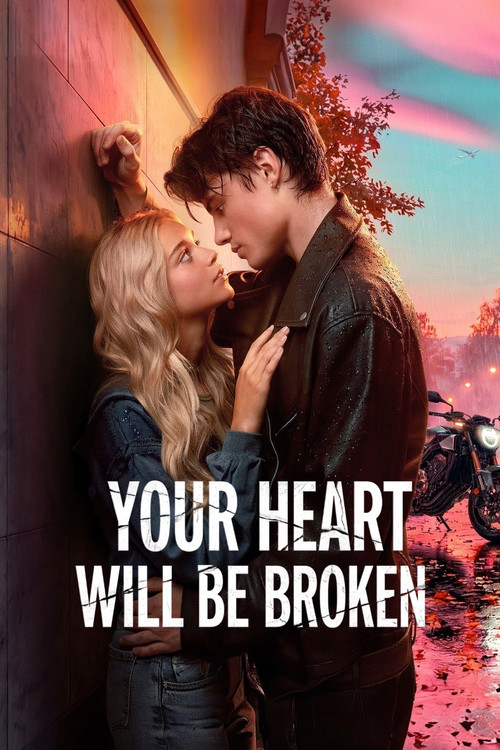
Your Heart Will Be Broken Review: A Gritty Fake Dating Gem
It’s the high-stakes high school drama you didn't know you needed, proving that some clichés are worth revisiting when the chemistry is this electric.
If you've ever felt like the new kid in a shark tank, you’ll immediately vibe with the survival instincts of our protagonist. You might think you’ve seen the "fake dating a bad boy" trope a thousand times before, but this Russian-originated drama adds a layer of grit that most Western teen flicks shy away from. It’s a story about a student finding her voice in a hostile environment, and while the title warns you that your heart will be broken, the journey is surprisingly soulful. It’s messy, it’s moody, and it’s definitely worth your Friday night.
Is Your Heart Will Be Broken Worth Watching? (Quick Verdict)
| Our Rating | 7.0/10 — Genuinely Addictive |
| Best For | Fans of After or Elite looking for more soul. |
| Skip If | You hate high school tropes or toxic-start romances. |
This isn't just another cookie-cutter romance; it’s a sharp character study on power dynamics and teenage isolation. While it hits some predictable beats, the execution feels fresh enough to keep you glued to the screen throughout the runtime.
Plot: What's Your Heart Will Be Broken Actually About?
Meet Polina, the new girl at a school where social hierarchies are enforced with a fist rather than a smile. After becoming a target for some particularly nasty bullying, she finds an unlikely savior in Bars, the very guy leading the charge against her. In a desperate move for survival, she strikes a deal that sounds straight out of a fever dream: Bars will act as her personal protector and pretend to be her boyfriend, but in exchange, Polina must follow his every command. It’s a dangerous game of submission and protection played out in the harsh light of the hallways and locker rooms.
As they navigate this forced proximity, the line between "the deal" and genuine affection begins to blur. However, the social ecosystem of their peers and the rigid expectations of Polina's family aren't exactly cheering for this union. Secrets from Bars’ past and Polina’s own struggle for autonomy create a pressure cooker environment where one wrong move could ruin everything. Just when you think you’ve figured out their endgame, a third-act revelation threatens to tear the whole arrangement apart. Will they survive the social fallout, or is the title a literal promise of what’s to come for these two?
Direction & Writing: Does It Deliver?
Mikhail Vaynberg knows exactly how to manipulate the audience's emotions, and I say that as a total compliment. He leans heavily into the "us against the world" aesthetic, ensuring the school environment feels more like a prison than a place of learning. The pacing is tight for the first two acts, though the screenplay occasionally trips over its own melodrama in the final thirty minutes. One standout moment is the "silent lunch" scene, where Vaynberg uses sharp, rhythmic cuts and zero dialogue to show the shift in power as Polina walks in on Bars' arm for the first time.
It’s visual storytelling at its best, conveying the suffocating tension of social scrutiny without a single word. My only real gripe is the writing for the secondary antagonists; some of the classmates feel like caricatures rather than actual teenagers, which occasionally pulls you out of the grounded reality the leads work so hard to establish. Vaynberg manages to balance the darker themes of coercion with moments of genuine vulnerability, making sure the romance doesn't feel entirely unearned despite its problematic origins. He creates a world that is visually cold but emotionally overheated, which is exactly where this genre thrives.
Performances: Who Shines, Who Doesn't?
Veronika Zhuravleva is a revelation as Polina. She manages to portray a student who is terrified yet remarkably resilient, avoiding the "damsel in distress" trap that often plagues these roles. There’s a specific scene in the school library where she has to stand her ground against Bars; the way her hands shake while her voice remains steady is a masterclass in subtle acting. On the other side, Daniel Vegas as Bars brings a brooding, magnetic energy that makes his eventual softening believable. He has that "eyes that tell a different story" quality that is essential for a redeemed bully character.
However, Ivan Trushin as the rival love interest feels a bit underwritten. He’s meant to be the "safe" choice, but he lacks the screen presence to make Polina’s dilemma feel like a real choice. Maksim Saprykin and Alya Mayer round out the cast with decent enough performances, though they are mostly there to move the plot along rather than occupy any real emotional space. The chemistry between Zhuravleva and Vegas is the undisputed engine of this movie; without their spark, the whole thing would have collapsed. They make you believe that two broken people can find a weird, twisted kind of peace in each other.
Visuals, Score & Production
The cinematography is surprisingly lush for a teen drama. The film uses a cool-toned palette—lots of deep blues and steely greys—to reflect the coldness of the social environment, which makes the warm, golden-hued moments between the leads feel like a sanctuary. The lighting in the night scenes is particularly effective, using neon reflections to create a sense of urban isolation. Musically, the score stays mostly in the background with moody synth-pop and melancholic piano melodies that underscore the emotional stakes. It never feels overbearing, which is a relief in a genre prone to manipulative violins. The sound design also deserves a nod; the oppressive noise of the school hallways contrasts sharply with the quiet, intimate sounds of Polina and Bars' private conversations, emphasizing their bubble of safety amidst the chaos. It’s a polished production that punches way above its weight class.
The Good & The Bad
What Works:
- The electric chemistry between Veronika Zhuravleva and Daniel Vegas makes the central romance feel urgent and real.
- Mikhail Vaynberg successfully transforms a familiar "fake dating" trope into a gritty, atmospheric drama.
- The visual storytelling, particularly the use of color palettes to represent emotional states, is top-tier.
- It handles the theme of bullying with more weight and consequence than your average teen movie.
What Doesn't:
- The secondary characters are often one-dimensional, serving as plot devices rather than people.
- The third act introduces a family conflict that feels slightly rushed and disconnected from the main arc.
Final Verdict: Should You Watch Your Heart Will Be Broken?
Your Heart Will Be Broken isn't trying to reinvent cinema, but it succeeds in being a deeply engaging, emotionally resonant drama that understands the intensity of teenage feelings. It’s for anyone who loves a good redemption arc and doesn't mind a bit of angst with their romance. While it stumbles slightly in its characterization of the supporting cast, the lead performances carry it across the finish line with grace. If you want a movie that makes you feel the weight of every stolen glance and whispered secret, this is it. It’s a solid addition to the 2026 slate that proves the romance genre still has some teeth.
DekhoPrime Rating: 7.0/10
Have you watched Your Heart Will Be Broken yet? Drop your take in the comments!
Frequently Asked Questions
Q: Is Your Heart Will Be Broken suitable for kids?
A: Not really; it’s aimed at a teen and young adult audience. The themes of bullying
📌 Related Posts
🎬 Have you watched this movie? Drop your thoughts in the comments!
Watch This Movie on DekhoPrime
