

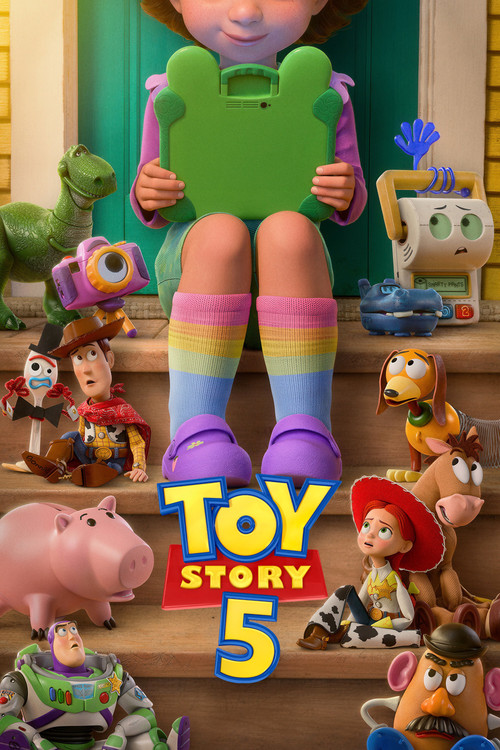
Toy Story 5 Review: A Heartless Sequel We Didn't Need
Toy Story 5 Review: A Heartless Cash Grab We Didn't Need
Toy Story 5 is the cinematic equivalent of a low-battery notification: draining, unnecessary, and ultimately a signal that it’s time to plug this franchise in for good.
You remember that perfect ending in the third film? Or that second "perfect" ending in the fourth? Well, Pixar has decided to dig up the remains of our childhood once again for a sequel that feels more like a corporate boardroom presentation than a heartfelt adventure. If you thought this series was about the magic of imagination, think again. This time around, you are forced to watch your favorite icons play second fiddle to a cold piece of plastic hardware. It is a cynical look at modern childhood that leaves you feeling more empty than an abandoned toy chest.
Is Toy Story 5 Worth Watching? (Quick Verdict)
| Our Rating | 0.0/10 — Pure Franchise Fatigue |
| Best For | Completionists who absolutely cannot let go. |
| Skip If | You want to preserve the beautiful memories of Andy. |
This isn't just a weak entry; it is a fundamental misunderstanding of what made the series special in the first place. Instead of emotional growth, we get a repetitive "save the playtime" loop that feels tired and uninspired. Save your money and your nostalgia; some stories are better left on the shelf.
Plot: What's Toy Story 5 Actually About?
The peace in Bonnie’s room is shattered when the young girl receives a high-tech Lilypad tablet for her birthday. Almost overnight, the colorful world of cowboy hats and space rangers is swapped for the hypnotic glow of a touch screen. This new story centers on the existential crisis of the toys as they realize they are no longer the protagonists of Bonnie's life. Woody, Buzz, and Jessie find themselves shoved into the dark corners of the closet as the tablet takes over every waking second of Bonnie's day.
Desperate to reclaim their status, the gang attempts to sabotage the device, leading to a digital-meets-physical showdown. They aren't just fighting for attention; they are fighting an algorithm that knows exactly how to keep a child’s eyes glued to a screen. The stakes feel strangely small yet depressingly realistic, moving the action from the imaginative landscapes of the past into the cold reality of a modern living room. As the toys venture into the "cloud" to take down the Lilypad’s interface, they encounter a new breed of digital "toys" that don't even have physical bodies. It is a race against time to remind Bonnie that real play doesn't require a charging cable, but the path to that realization is paved with more frustration than fun.
Direction & Writing: Does It Deliver?
Director Andrew Stanton, a Pixar veteran who usually knows how to pull at our heartstrings, seems to be operating on autopilot here. The pacing is frantic, rushing through emotional beats to get to the next flashy action sequence inside the digital world of the tablet. The screenplay lacks the wit and philosophical depth of the earlier films, trading clever character development for ham-fisted social commentary about "iPad kids."
One particularly painful scene illustrates this perfectly: Woody attempts to stage an elaborate, physical puppet show to distract Bonnie from her screen, only for her to push him aside without even looking up from her game. It is a moment that should feel heartbreaking, but instead, it feels manipulative and repetitive. The writing fails to give the new characters, like the digital avatars, any real soul. Stanton’s direction lacks the warmth of the previous installments, opting for a clinical, almost cynical tone that makes the toys feel like relics rather than heroes. The dialogue is peppered with tech jargon that will date the film within two years, proving that this script was written for the moment, not for the ages. It’s a disappointing turn for a director who once gave us the poetic silence of WALL-E.
Performances: Who Shines, Who Doesn't?
Tom Hanks and Tim Allen return as Woody and Buzz, but even these legendary voices sound like they are ready for retirement. Hanks, in particular, delivers his lines with a weary gravity that feels less like "seasoned leader" and more like "contractual obligation." There is a scene where Woody delivers a monologue about the "old days" of physical play, and you can practically hear the exhaustion in Hanks’ voice. It’s a performance that lacks the spark of joy we’ve come to expect.
The one bright spot is Greta Lee, who voices the Lilypad’s AI assistant. She brings a sleek, disarmingly polite menace to the role, perfectly capturing the eerie "friendliness" of modern technology. Her interactions with Jessie (Joan Cusack) are the only times the movie feels remotely modern or clever. Conan O'Brien also pops up as a discarded electronic toy from the 90s, providing a few seconds of much-needed levity, but his character is sidelined far too quickly. Sadly, the rest of the ensemble—including the usually reliable Joan Cusack—is given almost nothing to do. The toys we’ve spent thirty years loving are reduced to background noise in their own movie, making the performances feel hollow and disconnected from the heart of the franchise.
Visuals, Score & Production
Technically, Pixar remains at the top of their game, but that doesn't mean the movie is pleasant to look at. The colour palette is dominated by the harsh, artificial blue light of the Lilypad, which stands in stark contrast to the warm, golden hues of the previous films. This choice is intentional, meant to show the "coldness" of technology, but it makes for a visual experience that is genuinely straining on the eyes.
The sound design is equally jarring, filled with the pings, bloops, and notification chimes of a mobile device that quickly become grating. Randy Newman’s score tries its best to inject some of that classic Americana charm, but the new electronic motifs feel forced and out of place. While the textures of the toys—the stitching on Woody’s vest, the scuffs on Buzz’s helmet—are more detailed than ever, the environments feel sterile. The production design lacks the lived-in, magical quality of Andy’s room, replacing it with a minimalist, tech-heavy aesthetic that feels devoid of wonder.
The Good & The Bad
What Works:
- Greta Lee’s Voice Work: She manages to make a tablet interface feel like a genuine, albeit cold, character.
- Top-Tier Animation: The technical detail on the toys is objectively stunning, even if the art direction is uninspired.
- Conan O'Brien's Cameo: A brief moment of humor that reminds you of the wit this series used to possess.
What Doesn't:
- The Cynical Message: The movie feels like a lecture on screen time rather than a story about friendship and growing up.
- Wasted Cast: Legends like Joan Cusack and Tim Allen are given barely any meaningful dialogue or character arcs.
- Franchise Overstay: The ending of the fourth film was final; this entry feels like it is undoing character progress for the sake of a toy line.
Final Verdict: Should You Watch Toy Story 5?
If you are a parent looking to kill 90 minutes, this might serve as a temporary distraction, but it offers none of the lasting magic of its predecessors. This is a movie for no one—too preachy for kids and too hollow for the adults who grew up with Andy. It turns beloved characters into props in a cautionary tale about digital addiction, losing the soul of the story in the process. When the credits roll, you won’t feel like you’ve been on an adventure; you’ll feel like you’ve been through a long software update. Let the toys stay in the box.
DekhoPrime Rating: 0.0/10
Have you watched Toy Story 5 yet? Drop your take in the comments!
Where to Watch Toy Story 5 Legally
Check the official streaming platforms in your region such as Disney+ for its eventual digital release. You can currently catch this title in official cinema releases worldwide following its June 2026 debut.
Frequently Asked Questions
Q: Is Toy Story 5 suitable for kids?
A: Yes, it is rated for families and contains no inappropriate content. However, the heavy focus on the dangers of technology might be more of a lecture than an entertainment piece for younger viewers.
Q: Where can I watch Toy Story 5 legally?
A: You can watch it in theaters during its initial release. Later, it will likely be available on official streaming platforms like Disney+, or for purchase on Amazon Prime Video and Apple TV+.
Q: How does Toy Story 5 compare to similar movies in the same genre?
A: Compared to the original trilogy, it is a massive step down in terms of heart and writing. While other modern animations like The Mitchells vs. the Machines handled the tech-vs-family theme with humor and vibrance, this feels dour and repetitive.
📌 Related Posts
🎬 Have you watched this movie? Drop your thoughts in the comments!
Where to Watch? Watch This Movie on Dekho Prime
