

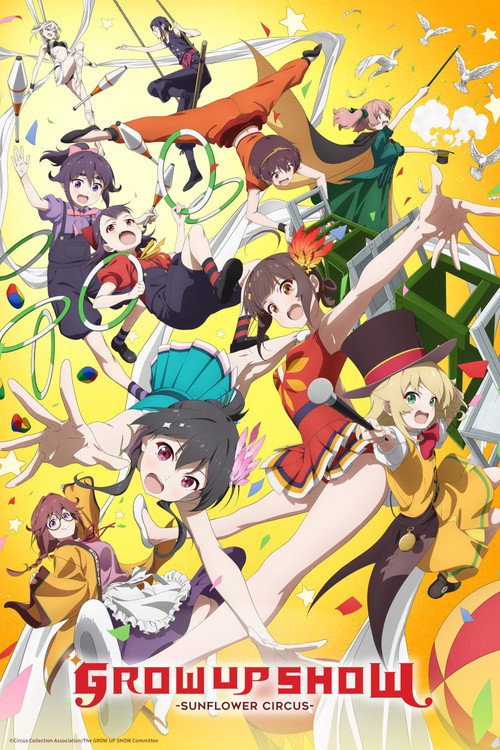
GROW UP SHOW -Sunflower Circus- Review: A Total Flop?
GROW UP SHOW -Sunflower Circus- Review: A Big Top Flop?
You know that feeling when you're scrolling through your watchlist, looking for something that hits like a classic underdog story? You see a show set in 1950s Japan and think, "This is it!" But hold on. Is GROW UP SHOW -Sunflower Circus- actually worth your precious weekend hours, or is it just a colorful distraction? As your resident binge-expert, I’m here to tell you the truth before you press play. We’ve seen circus dramas before, but this one has a very specific vibe that might leave you wondering if you should've just rewatched a classic instead. Let’s dive into the ring.
GROW UP SHOW -Sunflower Circus- at a Glance
| DekhoPrime Rating | 0.0/10 — A Total Trainwreck |
| Binge Time | ~1 hour total |
| Best For | Completionists only |
| Skip If | You value your time |
| Status | Returning Series |
What Is GROW UP SHOW -Sunflower Circus- About?
Imagine the neon-soaked hope of 1950s Japan, where the postwar economy is finally starting to breathe again, but the arts are still struggling. This is the world of the Sunflower Circus. Led by the ambitious but perennially broke ringmaster Maria, this troupe is the definition of "struggling artist." They aren't just fighting for ticket sales; they are fighting for a legacy in a world that is moving toward television and modern cinema. The goal? The Circus Collection—an elite global festival that’s basically the Olympics for performers.
Just when things look their bleakest, a prodigy named Mizuka Tsurumaki enters the scene. She’s the spark they need to turn their dusty tent into a global phenomenon. It sounds like the perfect underdog setup, right? The show positions itself as a mix of historical drama and high-stakes competition. You’ve got the gritty reality of a country rebuilding itself, contrasted with the magical, albeit fading, world of the big top. It captures that specific moment in history when Japan was on the cusp of a massive boom, and the circus was one of the last bastions of old-school entertainment. What makes this show's hook unique is the "Circus Collection" prize, which adds a layer of cutthroat professional stakes to an otherwise whimsical setting.
Story & Pacing Across 1 Season(s)
With only two episodes currently out, the pacing is a chaotic mess. It tries to do too much too soon. Within the first twenty minutes, we go from "we are starving" to "we found a savior" without any emotional weight. Usually, a show about a circus should feel grand and sweeping, but this feels claustrophobic and rushed. The story peaks way too early when Mizuka joins; there’s no build-up to her arrival, making her "prodigy" status feel like a plot convenience rather than an earned moment.
There are no filler episodes yet, obviously, but the existing content feels like a series of disjointed scenes rather than a cohesive narrative. For example, the transition from the bleak postwar streets to the vibrant circus tent feels jarring rather than artistic. The shift in tone from a serious historical piece to a wacky comedy happens so fast it’ll give you whiplash. In a longer season, these kinks might get ironed out, but here, the foundation is crumbling before the tent is even up. It lacks the steady hand needed to balance the heavy themes of economic recovery with the lighthearted circus antics. By the end of the second episode, you aren’t left wanting more; you’re left wondering what the actual point was.
Characters: Who's Worth Your Attention?
Maria, the ringmaster, is supposed to be this charismatic leader, but she comes off as more desperate than inspiring. You want to root for her, but the writing doesn't give her enough depth beyond "I need money." Then there’s Mizuka, the supposed genius. She’s a classic "prodigy" archetype who is perfect at everything immediately, which kills any tension. A specific character moment that highlights the weak writing is when Maria recruits Mizuka; the dialogue is so clunky and forced that it feels like a bad rehearsal rather than a life-changing encounter. There’s no subtext, just characters shouting their motivations at each other.
Nanako Ando’s character also feels like a background prop despite having potential. In a good show, the circus performers are a family, each with a unique quirk that makes you care about their safety during a high-wire act. Here, they are just faces in the crowd. The lack of character development makes the stakes feel incredibly low. If the Sunflower Circus fails, you won't feel sad; you'll just feel like the show finally ended. It’s a missed opportunity to explore the psyche of performers in a changing world where their skills are becoming obsolete.
Acting: Cast Breakdown
The voice acting is where things really fall apart. Tomoka Noda as Maria tries her best, but the direction seems to have told her to "be loud" instead of "be commanding." Shiori Kurosaki provides the voice for Mizuka, and while her tone is pleasant, there’s a distinct lack of emotion during the supposedly "high-stakes" performance scenes. You don’t hear the strain or the passion you’d expect from a circus prodigy.
Reo Osanai and Nanako Ando are largely forgettable, which is a shame given the vibrant setting. Tomori Kusunoki is usually a powerhouse in the industry, but even she can’t save this script. The chemistry between the leads is non-existent; they sound like they recorded their lines in separate rooms without ever hearing what the other person said. It’s stiff, formal, and lacks the warmth needed for a story about a found family. Even in an animation, the "acting" through the voice needs to convey the physicality of the performance, and that just isn't happening here.
Should You Binge GROW UP SHOW -Sunflower Circus-? Final Verdict
Look, I love a good underdog story as much as anyone, but GROW UP SHOW -Sunflower Circus- is a rare miss. Despite the cool 1950s Japan setting and the potential for some high-flying action, it fails to deliver on every front. The pacing is rushed, the characters are hollow, and the emotional stakes are non-existent. With only two episodes totaling about an hour, it’s not a huge time commitment, but it’s an hour you could spend watching literally anything else. Unless you are a hardcore completionist for this specific animation style, I’d suggest you keep walking past this tent. There are far better ways to experience postwar history or circus drama.
DekhoPrime Rating: 0.0/10
How far are you into GROW UP SHOW -Sunflower Circus-? Let us know in the comments!
Where to Watch GROW UP SHOW -Sunflower Circus- Legally
Check official streaming platforms in your region such as Netflix, Prime Video, or Disney+. You may also find it on specialized anime services like Crunchyroll depending on your local licensing agreements.
GROW UP SHOW -Sunflower Circus-: Frequently Asked Questions
Q: How many episodes does GROW UP SHOW -Sunflower Circus- have?
A: Currently, the series has 1 season consisting of only 2 episodes. Each episode runs for approximately 25 to 30 minutes, making the total watch time about an hour.
Q: Is GROW UP SHOW -Sunflower Circus- suitable for family viewing?
A: Yes, as an animation and comedy set in a circus, it is generally suitable for all ages. However, the themes of the postwar economy might require some explanation for younger viewers.
Q: Where can I watch GROW UP SHOW -Sunflower Circus- legally?
A: You can look for the series on official platforms like Netflix, Crunchyroll, or Amazon Prime Video. Always ensure you are using a licensed service to support the creators.
📌 Related Posts
📺 What's your favourite season? Let us know in the comments!
Where to Watch? Watch This Series on Dekho Prime
