

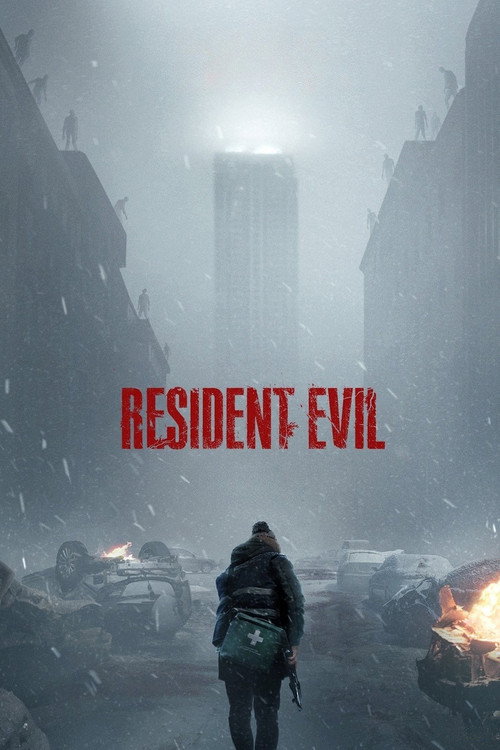
Resident Evil Review
Resident Evil Review: An Undead Disaster We Didn't Ask For
Save yourselves: Zach Cregger's Resident Evil is a cinematic plague you absolutely do not want to catch. You know that feeling when a director you admire, known for delivering genuinely fresh and terrifying horror, announces a new project, especially one with a resident fanbase like Resident Evil? The anticipation bubbles, the theories fly, and you ready yourself for a masterclass in fright. Well, prepare for a crushing wave of disappointment, because this 2026 iteration is less a thrilling outbreak and more a baffling misfire. It's a film that promises high-octane survival but instead delivers a tedious process of uninspired scares and muddled storytelling. If you're hoping for anything resembling the tension or character depth of Cregger's past work, or even a competent horror experience, you're in for a rude awakening.
Is Resident Evil Worth Watching? (Quick Verdict)
| Our Rating | 0/10 — A biohazard of blandness |
| Best For | Fans of extreme cinematic disappointment |
| Skip If | You value your time, sanity, or the Resident Evil name |
Let's be blunt: this movie is a catastrophic failure on almost every front. It's not just bad; it's astonishingly, frustratingly bad, making a strong case for one of the year's most egregious cinematic missteps. You'll spend more time questioning its existence than enjoying any part of it.
Plot: What's Resident Evil Actually About?
The premise sounds promising enough, a classic setup for survival horror. We meet Bryan (Austin Abrams), a seemingly ordinary medical courier, whose daily routine takes a terrifying turn. He's in the middle of a process of making a crucial delivery when the world around him erupts into inexplicable chaos. A sudden, virulent outbreak transforms the familiar urban landscape into a deadly gauntlet, forcing Bryan to immediately shift from mundane errands to a desperate fight for his life.
As society crumbles, Bryan finds himself caught in a terrifying struggle, not just against the infected, but also against desperate survivors and the sinister forces lurking in the shadows, seemingly orchestrating the disaster. His journey through the collapsing city is a frantic dash for safety, riddled with close calls and grim discoveries. He encounters a diverse, if thinly drawn, group of fellow survivors, each with their own reasons to live or die. But as Bryan navigates a city on the brink, he quickly learns that the greatest horrors aren't just the grotesque creatures chasing him, but the chilling truths about the outbreak's origin, and his own unexpected, deeply disturbing connection to it.
Direction & Writing: Does It Deliver?
Zach Cregger, whose previous work like Barbarian showcased a masterclass in tension and subversion, seems to have had an entire personality transplant for Resident Evil. Here, his directorial choices feel bewilderingly generic, almost as if an AI was tasked with creating a horror film based on the most basic algorithms. The pacing is a chaotic mess, swinging wildly between frantic, disorienting action sequences that are impossible to follow and painfully slow, exposition-heavy scenes that go nowhere. There's a particular sequence where Bryan is attempting to make a crucial radio delivery of information, which should be fraught with tension, but Cregger drains it of any urgency through bizarre camera angles and a complete lack of discernible threat, making the process of investment utterly futile.
The screenplay, if one can call it that, is equally baffling. Dialogue is clunky and often serves no purpose other than to awkwardly advance a plot point or explain something that should have been shown. Character motivations are inconsistent, and the narrative threads are so tangled they resemble a child's forgotten ball of yarn. It’s hard to tell if this was an attempt at deconstruction or simply a complete breakdown in the creative process. What should be a thrilling journey through an apocalyptic landscape becomes a monotonous slog, utterly failing to deliver on the promise of its premise or the talent of its director.
Performances: Who Shines, Who Doesn't?
In a film this fundamentally flawed, it’s challenging to pinpoint a true "shining" performance, as even the most capable actors struggle to rise above the material. Austin Abrams as Bryan, our reluctant medical courier, tries valiantly to inject some humanity into a character written with all the depth of a cardboard cutout. He spends most of the film looking appropriately terrified, and there’s a moment where he’s making a desperate plea for help over a crackling radio, his face a mask of raw fear, that hints at what could have been. However, the script gives him so little to work with that his performance ultimately feels like a wasted effort, his expressions of distress becoming repetitive rather than compelling.
The supporting cast fares no better. Zach Cherry, Kali Reis, Paul Walter Hauser, and Johnno Wilson are all talented individuals, but here they are reduced to little more than archetypes on a conveyer belt of peril. Cherry’s character provides some fleeting comic relief, but it often feels misplaced. Reis and Hauser, capable of delivering powerful performances, are given one-note roles that offer no room for nuance, their delivery of lines feeling stiff and uninspired. It's less a showcase of acting prowess and more a testament to how even good actors can be utterly undermined by a truly dreadful screenplay, leaving them no choice but to simply exist within the narrative's gaping holes.
Visuals, Score & Production
Visually, Resident Evil is a masterclass in mediocrity. The cinematography employs a relentlessly drab colour palette, dominated by washed-out greys and sickly greens that do little to evoke dread and instead simply create a sense of visual fatigue. There are moments that attempt to be atmospheric, with dimly lit corridors and shadowy figures, but they quickly devolve into a murky, indistinct mess, making it difficult to discern what’s happening on screen. The special effects for the various creatures are disappointingly generic, lacking any real menace or creativity; they look less like terrifying mutations and more like hastily rendered video game assets from two generations ago.
The sound design is equally uninspired. Jump scares are telegraphed with heavy-handed sonic cues, completely negating any potential impact. The score, a generic collection of "tension" stings and predictable orchestral swells, often actively works against any potential dread, making the process of immersion impossible. Instead of enhancing the narrative, the music often feels like a desperate attempt to manipulate emotions that the visuals and plot utterly fail to earn. The overall production feels cheap and uninspired, a far cry from what a major studio film, even one with a modest budget, should deliver.
The Good & The Bad
What Works:
- The initial concept: The core idea of a medical courier caught in an outbreak has genuine potential, even if the execution falls spectacularly flat.
- The runtime: It's mercifully not overlong, meaning the suffering is somewhat contained within its relatively brief duration.
- One specific creature design: There's a brief glimpse of a particular mutated creature that, for a fleeting moment, shows a spark of unsettling creativity, though it's quickly overshadowed.
What Doesn't:
- Lack of tension: Despite the genre, the film fails to build any genuine suspense or fear, making the process of watching a tedious chore.
- Character development: The characters are paper-thin, with motivations that shift arbitrarily, leaving you with no one to root for or care about, particularly our resident protagonist.
- Plot holes and inconsistencies:
📌 Related Posts
🎬 Have you watched this movie? Drop your thoughts in the comments!
Where to Watch? Watch This Movie on Dekho Prime
